

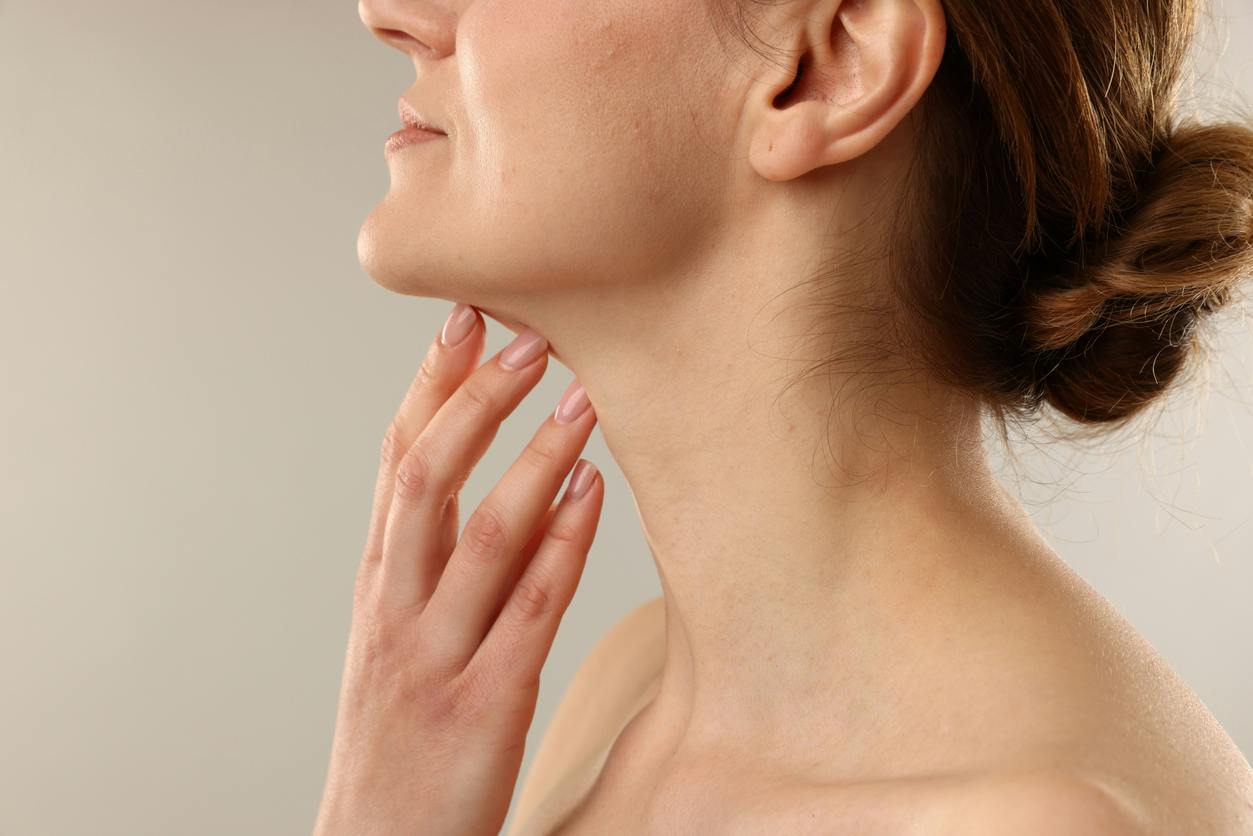
A neck lift in Richmond can produce a smooth, defined neckline, but when it is performed alone, the jowls, jawline, and lower face stay exactly as they were. The result is the "taut neck, aging jaw" mismatch: a refreshed neck sitting beneath a lower face that still shows its age.
Richmond Plastic Surgeons has served Richmond, Midlothian, and surrounding areas of Virginia for more than 25 years. Our plastic surgeons are board-certified by the American Board of Plastic Surgery, and they evaluate the face and neck as one connected system rather than two separate problems.
In this blog, we explain what the mismatch looks like, why it happens, how a neck lift differs from a facelift, and which options exist for patients who want a balanced result.
What Is the "Taut Neck, Aging Jaw" Mismatch?
The "taut neck, aging jaw" mismatch is a visible imbalance in which the neck looks tightened and defined while the jowls, jawline, and lower face still show laxity. It most often follows a procedure limited to the neck, such as liposuction under the chin or a small-incision technique that treats only the area beneath the jaw.
Common signs of the mismatch include:
- Smooth neck contours sitting beneath jowls that remain soft or sagging
- A jawline that looks blurred or interrupted where the tightened neck meets the lower face
- Marionette lines and folds around the mouth that stand out more against a tighter neck
- A face that reads as two different ages, with the neck looking noticeably younger than the cheeks and jaw
Why Can a Standalone Neck Lift Leave the Face Looking Unbalanced?
A standalone neck lift can leave the face looking unbalanced because the neck and lower face age as one connected unit. A layered review of neck anatomy in Plastic and Aesthetic Research explains that the platysma muscle in the neck joins the superficial muscular aponeurotic system (SMAS) in the face.
Four points explain why neck-only surgery can create a mismatch:
- Tissue descends together: With age, the same review notes, the SMAS and platysma typically descend along with the jowl fat pads, which blurs the lower border of the jaw and the junction between face and neck.
- Jowl tissue stays in place: Treating only the neck does not reposition that jowl tissue.
- Surgeons recognize the limit: In Seminars in Plastic Surgery, Mejia and colleagues state that when jowling and descent at the neck-face interface are significant, an isolated neck lift will not address the problem and will lead to a suboptimal result. A face and neck lift is the more appropriate operation for those patients.
- Contrast adds to the effect: A tighter neck can make untouched jowls and a softened jawline easier to notice, even though the lower face itself has not changed.
Neck Lift vs. Facelift: What Is the Difference?
The difference is scope: a neck lift focuses on the neck and the area beneath the jaw, while a facelift also repositions the cheeks, jowls, and lower face. Because the terms overlap, the scope of the operation matters more than its name.
| Option | Area treated | Effect on jowls and jawline |
| Neck liposuction | Fat beneath the chin and along the jawline | Does not correct structural problems, according to Mayo Clinic |
| Anterior neck lift | Tissues that shape the neck, through small incisions under the chin | Focused on the neck |
| Extended neck lift with a facelift | Deep tissues of the neck and lower face, with incisions under the chin and in front of the ear | Treats the neck and lower face together |
| Deep plane facelift | SMAS and platysma, mobilized with the midface | Repositions the lower face while supporting the neck, as Gordon and Sawan describe |
Patients considering a facelift in Richmond can choose among neck liposuction, a neck lift, a facelift, and a deep plane facelift at Richmond Plastic Surgeons.
When Is a Standalone Neck Lift Still the Right Choice?
A standalone neck lift is still the right choice when the main concerns sit below the jawline, and the jowls and lower face remain well supported.
Neck-only treatment may fit patients who show:
- Vertical platysmal bands or central neck laxity
- Fullness beneath the chin
- A defined jawline with minimal jowling
- Skin flexible enough to redrape smoothly
Liposuction typically works well for younger patients with flexible skin and pockets of fat under the neck, but it will not correct structural problems.
How Do Surgeons Evaluate Facial Harmony Before Neck Surgery?
Surgeons evaluate facial harmony by assessing the neck and lower face together before choosing a procedure. Mejia and colleagues list the focus of a neck evaluation as fat, muscle, the submandibular gland, skin, and the neck-face interface, which means the jowls and jawline.
A thorough evaluation typically covers:
- Jowl position and jawline definition
- Platysmal bands and the cervicomental angle, the angle between the underside of the chin and the neck
- Skin laxity and elasticity
- Chin projection, since a review of the difficult neck in facelifting links an underprojected chin with an obtuse neck angle, excess fat, and platysmal banding
At Richmond Plastic Surgeons, cosmetic consultations also offer a computerized prediction of expected results, so patients can see how the neck and jawline may relate to each other.
When chin projection is part of the picture, chin augmentation may be discussed alongside neck treatment.
What Can You Do if Neck Surgery Has Left Your Face Mismatched?
Patients whose neck surgery left the jawline behind generally have two paths: a surgical revision that addresses the lower face, and non-surgical treatments that soften the contrast. A single procedure may not achieve optimal results in some situations, and another surgery may be necessary.
Options include:
- A facelift or lower face procedure to reposition the jowls and jawline. A review of revision facelift and neck lift explains that secondary procedures are more technically complex because scar tissue commonly forms after earlier surgery, so they call for a comprehensive preoperative assessment.
- BOTOX to relax vertical neck bands
- Dermal fillers to restore lost volume, and Kybella to break down fat cells beneath the chin
- Radiofrequency microneedling to stimulate collagen and refine skin quality
Nonsurgical treatments cannot achieve the same results as surgery, although they may complement it. Richmond Plastic Surgeons offers BOTOX, dermal fillers, Kybella, and microneedling alongside its surgical services.
How Do Recovery and Risks Compare for a Neck Lift and a Combined Procedure?
Recovery and risks depend mainly on how extensive the surgery is, so no single timeline fits every patient. Liposuction is the least invasive neck option, while an extended neck lift combined with a facelift typically uses incisions under the chin, in front of the ear, and along the hairline.
It may take several weeks to months for swelling to fully dissipate and up to six months for incision lines to mature, while incision lines can take up to a year to fade. After a facelift, a bandage may be placed around the face, and small tubes may be present to draw off excess fluid.
Risks include:
- Bleeding under the skin, called a hematoma
- Scarring and infection
- Nerve injury
- Skin loss and open wounds
- Reaction to anesthetic
Avoid the "Taut Neck, Aging Jaw" Mismatch
A neck lift in Richmond works best when the surgeon plans for the whole lower face, not only the neck. The board-certified plastic surgeons at Richmond Plastic Surgeons have served Richmond, Midlothian, and surrounding communities for more than 25 years, and they evaluate the jowls, jawline, and neck together before recommending a procedure.
Whether the right plan is neck liposuction, a neck lift, a facelift, or a deep plane facelift, the goal is a natural, balanced result that fits each patient's anatomy and goals. Results vary, and no surgeon can promise a specific outcome.
To schedule a cosmetic consultation, call 804.368.3547 or request an appointment through our website. Our offices are in Midlothian at 14401 Sommerville Court #1A and in Richmond at 1630 Wilkes Ridge Parkway, Suite 201.
Disclaimer: This information is provided for educational purposes only and does not replace a consultation with a board-certified plastic surgeon. Outcomes, risks, and suitability vary from patient to patient.
Sources
- American Society of Plastic Surgeons. Neck Lift
- American Society of Plastic Surgeons. Neck Lift Results
- American Society of Plastic Surgeons. Neck Lift Risks and Safety
- American Society of Plastic Surgeons. The Beauty of a Neck Lift
- American Society of Plastic Surgeons. Facelift Surgery
- American Society of Plastic Surgeons. Facelift Recovery
- Mayo Clinic. Neck Lift
- Mejia JD, Nahai FR, Nahai F, Momoh AO. Isolated Management of the Aging Neck. Seminars in Plastic Surgery. 2009;23(4):264-273.
- A Layered Approach to Neck Lift. Plastic and Aesthetic Research. 2021;8:11.
- The Difficult Neck in Facelifting. Facial Plastic Surgery. 2017;33(3):271-278.
- Gordon NA, Sawan TG. Deep-Plane Approach to the Vertical Platysma Advancement: Technical Modifications and Nuances over 25 Years.
- Dibbs RP, Chamata E, Ferry AM, Friedman JD. Revision Facelift and Neck Lift. Seminars in Plastic Surgery. 2021;35(2):88-97.